Kaylee's engagement ring
Cinder & EllaKaylee's engagement ring is the small, conspicuous object that converts a private threat into a public engagement. Produced by Kaylee Summers during a confrontation with Brian Oliver, the diamond is not simply a gift or a sign of affection: she already has it, although Brian was supposed to obtain it, and she uses it to make his resistance harder to sustain. When she later displays the ring to the room, its public meaning is immediate—she and Brian are apparently engaged—even as Brian refuses to reciprocate her declaration of love.
Appearance and Introduction
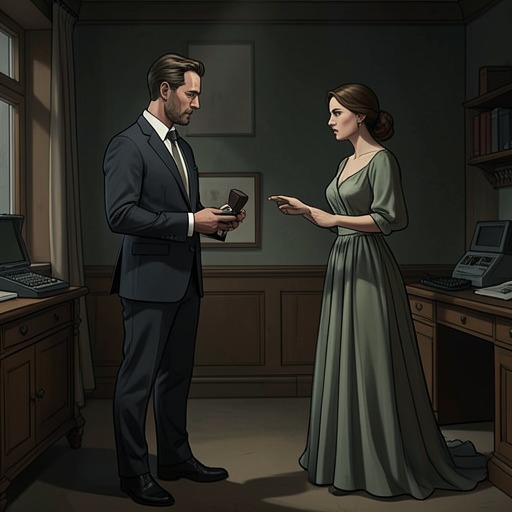
After Kaylee has gone quiet, Brian notices the pain in her eyes and reaches across the table to apologize. Her next move shifts the exchange from hurt to strategy: she takes a small engagement ring from her handbag, slips it onto her finger to see how it looks, and asks Brian to admire it. Her wistful attention to the diamond makes the ring seem, for a moment, like an object of romantic anticipation. But the moment is unstable. Brian remembers that he was meant to procure the ring and is startled that Kaylee already has it.
Kaylee's possession of the ring reveals that she anticipated Brian would try to evade the engagement that night. The object arrives in the scene ahead of his consent: rather than waiting for him to make a proposal, she brings the proof of one with her. Her handling of it turns a conventional engagement token into leverage, while her question about its beauty briefly disguises the pressure embedded in the gesture.
Coercion and Public Performance
The ring's role becomes clear when Kaylee threatens to damage Brian's career and his father's, invoking her father's power over the films and the Hollywood jobs on which they depend. More personally, she threatens to target Ella if Brian's celebrity makes their anonymous friendship public. Brian fears that, once he meets Ella, the world will learn of her through the attention that follows everything he does. Kaylee's ultimatum makes the ring part of a larger bargain: he must perform the romance convincingly, or Kaylee will use her influence against the people he cares about.
Brian warns Kaylee not to involve Ella, but Kaylee answers that he has already drawn Ella into the situation and insists that he convince the world—and Kaylee herself—that his feelings belong to her. The ring supplies the visible prop for that demand. Its significance is not only that it signifies an engagement; it helps give an imposed public story the appearance of a voluntary romantic choice.
The Ring in the Engagement Scene
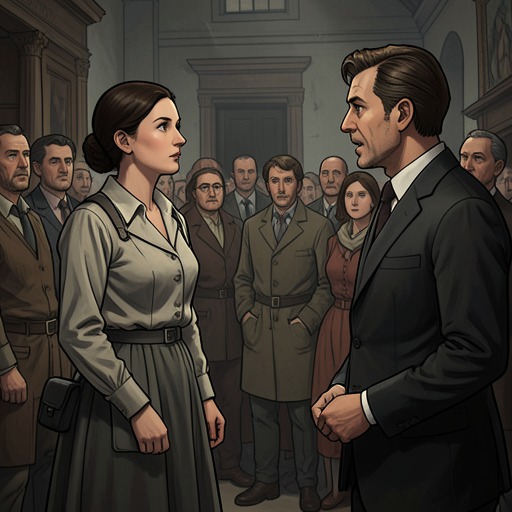
Without warning, Kaylee springs to her feet, squeals, and announces an ecstatic acceptance. She circles the small table, throws herself into Brian's arms, and kisses him while the people in the room gather around, clapping and cheering. The scene makes the ring's public function unmistakable: the crowd sees a proposal and an answer, not the threat and calculation that have shaped them.
Once Brian frees his mouth, he draws Kaylee close enough to whisper an insult in her ear. Kaylee answers sweetly for the audience, extending her newly diamond-adorned hand so that everyone can see the ring and announcing that they will marry. She calls the engagement her best birthday present. The diamond, now displayed rather than merely inspected, helps transform Kaylee's performance into apparent evidence: the room can see a ring and hear an announcement, while the coercive circumstances remain concealed from the onlookers.
Meaning and Consequences
Kaylee waits for Brian to return her declaration of love, but he will not say those words, whether sincerely or as part of the act. Instead, he answers only, "Good," drawing hearty laughter from the crowd. That gap between the ring's public promise and Brian's private refusal defines the object’s significance. The engagement appears complete to those celebrating it, yet the scene offers no mutual declaration of love; the conspicuous diamond certifies the performance, not the feeling.
The ring also embodies the imbalance between the two characters' positions. Kaylee controls the object, the timing of its appearance, and the story it helps present to the room. Brian, who had been expected to obtain it, is left reacting to a token already in her possession and to a spectacle already in motion. Rather than securing an intimate commitment, the ring becomes an instrument through which Kaylee can pressure Brian into playing her fiancé in public. Its polished promise of romance therefore carries a darker consequence: it helps make their coerced arrangement visible as a celebration while leaving its real terms unspoken.